Collaboration is also part of engineering
From their very first semester, engineering students at AU Herning learn to work with the elements that make a team successful. Namely communication, different strengths and the ability to solve problems together.

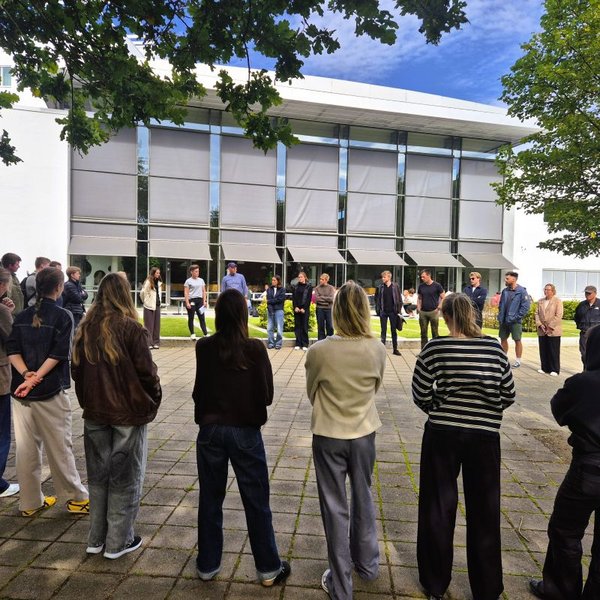

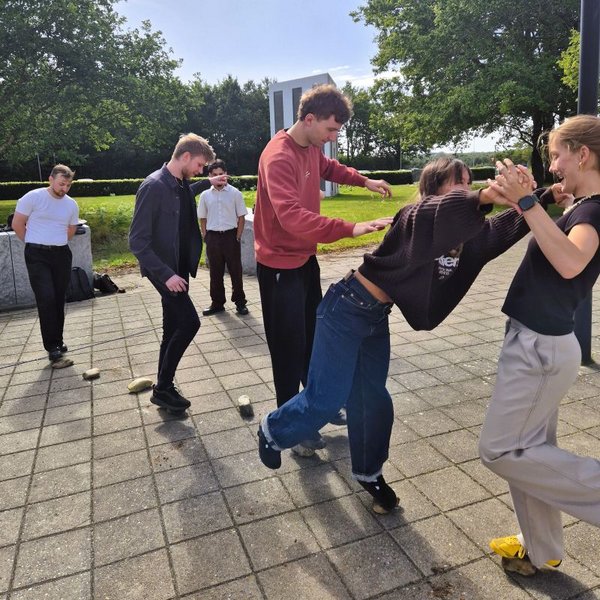
A small catapult, a tennis ball and one task: Make the ball travel as far as possible.
It sounds simple enough. But how does a group decide what to try first? Who gets heard when everyone has ideas? And what happens if the first attempt does not work?
These are some of the questions explored when around 45 first-year students from the Bachelor of Engineering programmes Business Development, BDE and Global Management and Manufacturing, GMM take part in a workshop as part of the course Personal and Social Competencies (PKO).
Working in five groups, the students complete a series of exercises designed to challenge the way they work together. They test catapults, tackle a task involving stones and take part in an exercise focusing on trust.
Afterwards, they reflect on how they worked as a team. How did we make decisions? Did everyone have a chance to contribute? And what could we do differently next time?
When the group knows more than the individual
The students continue to explore these questions in PKO, looking at how they communicate, the roles they take on in a team and how individual differences can strengthen collaboration.
One of the key questions is how a team can make the most of the knowledge and ideas each member brings. That involves more than simply dividing up the work. The students also practise listening, asking questions, explaining their ideas clearly and adapting their approach along the way.
These are skills they will need as the challenges they face become more complex.
On BDE, students develop ideas and explore whether they can be turned into viable products or solutions. On GMM, they work with how companies can plan and improve their production and supply chains. And when working on projects with companies, students need to draw on different perspectives and make decisions together.
That work starts in the very first semester. Even when the immediate challenge is simply to make a tennis ball travel a little further.